
Blog
How to Choose the Right Trading Company in Brazil

Selecting a trading company is often treated as a commercial decision based on price, years in business or shipment volume. While these factors certainly deserve consideration, they rarely provide a reliable indication of a company’s technical capability. Brazil has a very complex customs legislation and strict regulatory oversight. This requires additional care when selecting a trading company in Brazil.
Routine export shipments certainly require organization and operational discipline. However, they rarely test the full range of capabilities necessary to manage highly regulated, technically demanding or commercially sensitive international projects. Examples of projects that generally require higher levels of technical capability include:
By running complex international operations, trading companies develop institutional capabilities that cannot easily be replicated. Their competitive advantage is not simply operational experience. It is the ability to analyze international projects from multiple perspectives, and execute them with lower customs, regulatory, compliance and logistics risks.
Rather than treating international trade as a sequence of isolated operational activities, these trading companies recognize that every international project represents a business decision involving commercial, regulatory, contractual, financial and logistical considerations simultaneously, capable of influencing cost, feasibility, and long-term business performance.
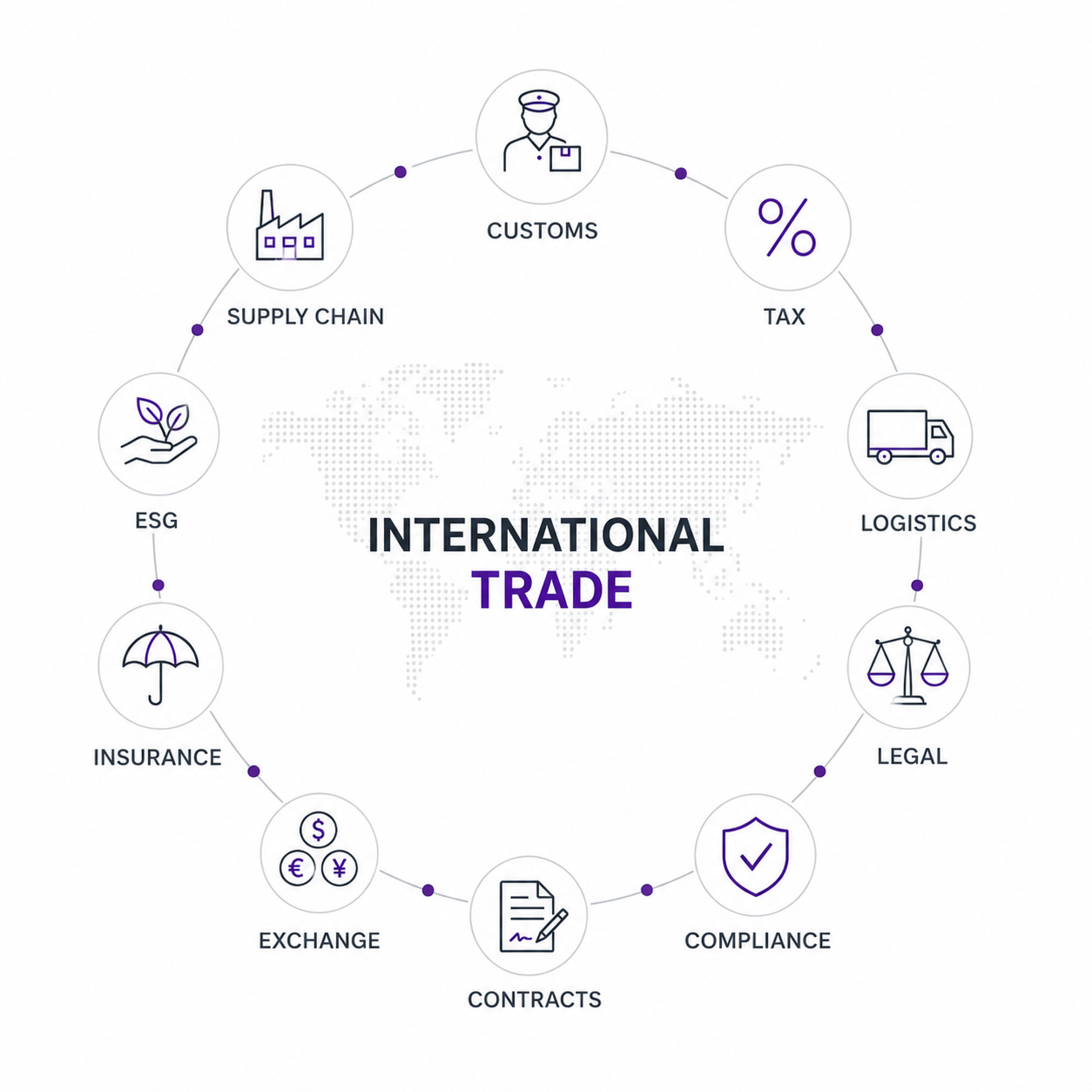
These disciplines do not operate independently. Let's consider that an apparently competitive supplier may present sustainable risks, or a commercially attractive quotation may become financially inefficient after tax implications are evaluated.
Experienced trading companies begin by evaluating the project itself, not only transportation, documentation or pricing. Before recommending any solution, they seek to understand whether the proposed transaction is commercially, operationally and legally viable. They also distinguish tradings that merely execute export procedures from those capable of managing international trade strategically.
One of the greatest misconceptions in international trade is the assumption that a project begins when a purchase order is issued or transportation is booked. In reality, successful international projects begin much earlier—with a structured assessment. A more relevant question is can this trading company consistently make sound technical decisions under complex operational conditions?
Ultimately, choosing a trading company in Brazil is less about selecting an exporter and more about selecting a strategic partner capable of improving business decisions. A far more meaningful indicator is frequently overlooked: the complexity of the international projects the trading company is capable of managing.
At Braver, every international trade project begins with a structured technical assessment before execution. Rather than treating exports as standardized operational routines, each project is evaluated from multiple perspectives, including commercial viability, regulatory requirements, contractual implications, logistics, taxation, compliance and operational risk.
This multidisciplinary methodology enables our team to identify potential constraints early, recommend alternative approaches when appropriate and provide international buyers with greater predictability throughout the entire transaction. Our objective extends beyond coordinating exports. We help organizations make better international business decisions.
In an increasingly complex global business environment, choosing the right trading company in Brazil is no longer an operational decision—it is a strategic investment in supply chain resilience.
Operational complexity under management is often the strongest indicator of technical capability for a trading company. Tradings capable of consistently managing complex international projects develop governance structures, multidisciplinary expertise and decision-making processes that ultimately create greater value for international buyers. If you do business in Brazil, bring your projects to a Braver Project Manager and let us lead the way.
Routine export shipments certainly require organization and operational discipline. However, they rarely test the full range of capabilities necessary to manage highly regulated, technically demanding or commercially sensitive international projects. Examples of projects that generally require higher levels of technical capability include:
- Industrial machinery, including used equipment
- Hazardous chemicals
- Fine art and culturally sensitive assets
- Precious stones and high-value commodities
- Biological products
- Materials subject to technical certification
- Highly regulated medical and healthcare products
By running complex international operations, trading companies develop institutional capabilities that cannot easily be replicated. Their competitive advantage is not simply operational experience. It is the ability to analyze international projects from multiple perspectives, and execute them with lower customs, regulatory, compliance and logistics risks.
Rather than treating international trade as a sequence of isolated operational activities, these trading companies recognize that every international project represents a business decision involving commercial, regulatory, contractual, financial and logistical considerations simultaneously, capable of influencing cost, feasibility, and long-term business performance.
These disciplines do not operate independently. Let's consider that an apparently competitive supplier may present sustainable risks, or a commercially attractive quotation may become financially inefficient after tax implications are evaluated.
Experienced trading companies begin by evaluating the project itself, not only transportation, documentation or pricing. Before recommending any solution, they seek to understand whether the proposed transaction is commercially, operationally and legally viable. They also distinguish tradings that merely execute export procedures from those capable of managing international trade strategically.
One of the greatest misconceptions in international trade is the assumption that a project begins when a purchase order is issued or transportation is booked. In reality, successful international projects begin much earlier—with a structured assessment. A more relevant question is can this trading company consistently make sound technical decisions under complex operational conditions?
Ultimately, choosing a trading company in Brazil is less about selecting an exporter and more about selecting a strategic partner capable of improving business decisions. A far more meaningful indicator is frequently overlooked: the complexity of the international projects the trading company is capable of managing.
At Braver, every international trade project begins with a structured technical assessment before execution. Rather than treating exports as standardized operational routines, each project is evaluated from multiple perspectives, including commercial viability, regulatory requirements, contractual implications, logistics, taxation, compliance and operational risk.
This multidisciplinary methodology enables our team to identify potential constraints early, recommend alternative approaches when appropriate and provide international buyers with greater predictability throughout the entire transaction. Our objective extends beyond coordinating exports. We help organizations make better international business decisions.
In an increasingly complex global business environment, choosing the right trading company in Brazil is no longer an operational decision—it is a strategic investment in supply chain resilience.
Operational complexity under management is often the strongest indicator of technical capability for a trading company. Tradings capable of consistently managing complex international projects develop governance structures, multidisciplinary expertise and decision-making processes that ultimately create greater value for international buyers. If you do business in Brazil, bring your projects to a Braver Project Manager and let us lead the way.